Dr. Mohana Rao Patibandla: Bringing Advanced Neurosurgical Care Closer to Home
The post Dr. Mohana Rao Patibandla: Bringing Advanced Neurosurgical Care Closer to Home first appeared on
Press Release Disclaimer: This is a press release distributed through the XPR Media network. It has not been independently verified by our newsroom.

Guntur, Andhra Pradesh, India (PRUnderground) November 17th, 2026
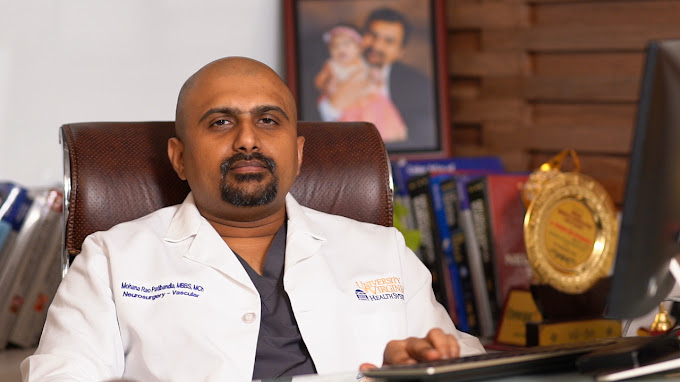
Advanced neurosurgical care has traditionally been concentrated in major metropolitan cities, often requiring patients from Tier-2 and Tier-3 cities to travel long distances for specialised treatment. In Guntur, Andhra Pradesh, Dr. Mohana Rao Patibandla has worked to change this by bringing advanced neurosurgical expertise, technology and multidisciplinary care closer to patients in the region.
After extensive neurosurgical training in India and the United States, Dr. Rao returned to Guntur to build a centre where complex brain and spine conditions could be managed with contemporary surgical techniques and international standards of care. Today, Dr. Rao’s Hospital – International Institute of Neurosciences (IIN) provides specialised services across complex brain and spine surgery, epilepsy surgery, paediatric neurosurgery, cerebrovascular and endovascular neurosurgery, skull base surgery, endoscopic neurosurgery, neuro-oncology, minimally invasive brain and spine surgery, stereotactic radiosurgery and neurocritical care.
From Guntur to Advanced Neurosurgical Training
Dr. Rao’s international training included exposure to epilepsy surgery, paediatric neurosurgery, endoscopic and minimally invasive neurosurgery, cerebrovascular surgery, skull base surgery, complex spine surgery and stereotactic radiosurgery. Reflecting on his decision to return, he explains:
“The question I kept asking myself was simple: Why should patients from Andhra Pradesh travel hundreds of kilometres for advanced brain or spine surgery when that expertise can be brought to them?”
That philosophy remains central: rather than limiting advanced care to metropolitan centres, he has focused on developing specialised infrastructure, trained teams and comprehensive systems within a regional setting.
Building an End-to-End Neuroscience Centre
Modern neurosurgical care extends beyond the operating room. At Dr. Rao’s Hospital, care brings together neurologists, neurosurgeons, neuro-anesthesiologists, neuroradiologists, neurophysiologists, neurocritical care specialists, physiotherapists, speech therapists and rehabilitation teams, involved before, during and after surgery.
For epilepsy patients, this can mean coordinated evaluation with video EEG, brain imaging and neuropsychological assessment before treatment decisions are made. For stroke patients, the pathway may involve emergency neurological assessment, endovascular intervention where appropriate, neurocritical care and rehabilitation. Dr. Rao says:
“Patients should not have to navigate different hospitals for different stages of treatment. They deserve continuity of care from diagnosis to recovery.”
Emergency Neuroscience: Stroke, Brain Haemorrhage and Neurotrauma
Stroke, intracranial haemorrhage, traumatic brain injury and other acute neurological conditions may require rapid diagnosis, multidisciplinary decision-making and, in selected cases, emergency surgery or endovascular intervention. Guntur’s neuroscience infrastructure is intended to support managing these emergencies closer to home.
Cerebrovascular and endovascular neurosurgery, including aneurysms, vascular disorders and selected acute stroke conditions, is an important part of Dr. Rao’s practice. His experience includes more than 3,000 endovascular neurosurgical procedures and more than 400 aneurysm procedures, within a broader practice spanning open and endovascular treatment.
Complex Brain Tumour and Skull Base Surgery
Brain tumours and skull base lesions are challenging because of their proximity to critical blood vessels, cranial nerves and important brain areas. Dr. Rao’s practice includes complex brain tumour surgery, skull base surgery, neuro-oncology and minimally invasive approaches tailored to each lesion, with more than 300 cerebellopontine-angle tumour surgeries and more than 470 endoscopic pituitary surgeries. The emphasis is on planning an appropriate surgical corridor while considering neurological function, vascular structures, cranial nerves and the patient’s longer-term recovery, not simply removing a lesion.
Advanced Spine Surgery: Precision With Tissue Preservation
Minimally invasive spine surgery reduces tissue disruption while maintaining appropriate decompression and stabilisation when indicated. Dr. Rao’s experience includes minimally invasive spine surgery, endoscopic spine procedures and complex spinal conditions, with more than 12,000 minimally invasive procedures and more than 1,000 endoscopic spine procedures. The philosophy is to select the appropriate procedure for the individual patient rather than apply a single technique to every condition.
Bringing Global Standards to a Regional Setting
Dr. Rao’s Hospital has developed infrastructure including neuronavigation, intraoperative neuromonitoring, endovascular capabilities, minimally invasive surgical platforms and neurocritical care facilities. The ThreeBestRated profile specifically highlights a Flat Panel Biplane Vascular Hybrid Cath Lab and Storz 4K endoscopic technology. Dr. Rao says:
“Global standards are not defined by location; they are defined by systems, protocols and culture.”
Minimally Invasive Neurosurgery and Careful Planning
Minimally invasive neurosurgery spans Dr. Rao’s brain and spine practice. Approaches include endoscopic surgery, keyhole approaches, tubular corridor techniques and other methods that reach the pathology while limiting unnecessary tissue disruption. In selected deep-seated brain lesions, tubular retractor-based approaches provide a defined surgical corridor while attempting to preserve surrounding brain tissue; endoscopic techniques are also used in selected skull base and pituitary procedures and in the spine practice. Dr. Rao explains:
“Choosing the right operation is often more important than choosing the smallest operation.”
Keyhole neurosurgery involves much more than a smaller skin opening. The surgical corridor, trajectory, anatomical landmarks, patient positioning and the lesion’s relationship to critical structures all influence safety and feasibility. Advanced imaging, neuronavigation, intraoperative monitoring and endoscopic or microscopic visualisation complement careful anatomical planning, keeping the patient’s anatomy and pathology at the centre of decision-making.
From Clinical Practice to Neurosurgical Research
Dr. Rao’s academic and research focus spans minimally invasive neurosurgery, spine surgery, cerebrovascular surgery and intraoperative neurophysiological monitoring. He reports a series of 1,008 consecutive neurosurgical procedures monitored with multimodal intraoperative neurophysiology, reflecting interest in how intraoperative physiological information can inform surgical decisions and neurological safety. Research aims to document clinical experience and evaluate systems and techniques that can improve patient care.
Clinical Experience and Surgical Expertise
With more than 15,000 neurosurgical procedures, Dr. Rao has experience across complex brain, spine, cerebrovascular and minimally invasive neurosurgery, including:
-
>> More than 15,000 total neurosurgical procedures
-
>> More than 12,000 minimally invasive procedures
-
>> More than 3,000 endovascular neurosurgical procedures
-
>> More than 2,000 stereotactic radiosurgery procedures
-
>> More than 1,000 endoscopic spine procedures
-
>> More than 470 endoscopic pituitary surgeries
-
>> More than 400 aneurysm procedures
-
>> More than 300 cerebellopontine-angle tumour surgeries
He has also reported 1,008 consecutive neurosurgical procedures involving intraoperative neurophysiological monitoring. These figures represent different areas of practice and should not be added together, as cases may involve more than one technique or category.
Recognition and Awards
Dr. Rao has received recognition from national and international neurosurgical and minimally invasive spine communities. Internationally, this includes the Brainlab Neurosurgery Award associated with the Congress of Neurological Surgeons (CNS), USA, in 2018 recognition associated with the Pacific Asia Minimally Invasive Spine Surgery (PASMISS) community; recognition associated with MISSABCON and minimally invasive spine surgery organisations, and a Gold Medal from COSS for minimally invasive spine surgery.
National and professional recognitions include Featured in Forbes India, Outlook 2026 best doctors south, Economic Times Business Excellence Award 2025, ET Health Award 2025, Radiocity FM 91.1 Icon Award 2025, Sardar Vallabhbhai Patel Unity Award 2025, Atal Achievement Award, India Today South India Eminent Doctors recognition and Leaders Awards recognition.
Care That Looks Beyond the Operation
Success in neurosurgery is not defined only by what happens in the operating room. Recovery, rehabilitation, return to education or employment, independence and quality of life are equally important. A young patient who returns to school, resumes everyday activities or regains independence after serious neurological illness represents an outcome beyond the procedure itself. As Dr. Rao puts it:
“Neurosurgery is not about performing difficult operations; it is about restoring someone’s future.”
Technology With Clinical Purpose
Neuronavigation, intraoperative neuromonitoring, advanced imaging, endoscopy, minimally invasive instruments, endovascular platforms and stereotactic radiosurgery give surgeons additional information and precision, but Dr. Rao integrates them into clinical decision-making rather than treating technology as an objective.
“The future is not about replacing surgeons with machines; it is about helping surgeons make safer and more informed decisions.”
Emerging areas such as artificial intelligence, tractography and connectomics, robotics and advanced navigation, augmented reality, intraoperative imaging and increasingly refined endoscopic and minimally invasive techniques are expected to keep influencing practice. Epilepsy surgery, functional neurosurgery, cerebrovascular intervention, skull base surgery, neuro-oncology, complex spine surgery and stereotactic radiosurgery continue to evolve, and the goal is careful integration of technology with clinical judgement, surgical experience and patient-specific planning.
Learning, Education and Mentorship
Dr. Rao maintains a strong focus on continuing education, academic conferences, research presentations and evolving surgical techniques. Another of his principles:
“Build depth before seeking recognition.”
For him, professional growth is closely connected to learning, technical refinement, research and the ability to translate new developments into meaningful patient care. Advanced neurosurgery also depends on training the next generation, so his vision includes education, academic collaboration, research and exposure to contemporary techniques. A regional neuroscience centre can serve patients, trainees and professionals wanting to learn modern brain, spine and cerebrovascular surgery.
Advanced Neurosurgery in a Tier-2 City
Specialised neurosurgical services in Guntur reflect a wider change in Indian healthcare: patients increasingly seek advanced treatment without travelling to large metropolitan centres, provided expertise, infrastructure and multidisciplinary support are available. For a Tier-2 city, this requires more than equipment. It involves building teams, establishing protocols, maintaining clinical standards and developing systems that support patients throughout their treatment journey.
Growing Dr. Rao’s Hospital in Guntur
Dr. Rao’s Hospital – International Institute of Neurosciences (IIN) was established to develop a specialised neuroscience centre in Guntur, with the areas of focus listed above. The vision extends beyond treatment: Dr. Rao aims to develop an environment where patient care, research, education and advanced training grow together.
“We want Dr. Rao’s Hospital to become a centre where innovation, education and patient care grow together–not just for Guntur, but for the wider region.”
Dr. Rao’s journey combines international neurosurgical training with the needs of patients in Andhra Pradesh, so that they can access advanced neurological care without always travelling hundreds of kilometres to metropolitan centres. For him, building advanced neurosurgery in Guntur is about developing a complete ecosystem of expertise, technology, research, education, rehabilitation and patient-centred care, and the IIN represents that continuing effort.
Recognition From ThreeBestRated®
Dr. Mohana Rao Patibandla has been featured among the recommended neurosurgeons in Guntur by ThreeBestRated®, with his practice based at Dr. Rao’s Hospital in Kothapeta. The profile highlights his clinical focus across stroke, epilepsy, brain and spine tumours, neurovascular conditions, paediatric neurosurgery, minimally invasive neurosurgery, spine surgery, neurotrauma and stereotactic radiosurgery. The original profile notes that the hospital has served more than 50,000 patients; with the updated clinical figures, Dr. Rao’s reported surgical experience now stands at more than 15,000 neurosurgical procedures.
“Trust is built one patient at a time.” For details about Dr. Mohana Rao Patibandla, his areas of neurosurgical expertise and Dr. Rao’s Hospital,explore: https://drraoshospitals.com/navigating-excellence-dr-mohana-rao-patibandla-indias-premier-neurosurgeon-in-guntur/
Contact information:
Phone: 90100 56444 / 9010057444
Email: drpatibandla@gmail.com
Address: 12-19-97, Old Bank Road, Besides Ak Khan Biryani Point, Kothapeta, Guntur, AP, 522001